

Digital product selling has become one of the most powerful ways to build an online business in today’s creator-driven economy. Whether you’re an entrepreneur, freelancer, coach, or content creator, selling digital products allows you to generate income without the limitations of physical inventory or shipping.
In this guide, you’ll learn what digital product selling is, why it’s profitable, and how to succeed in this fast-growing market.
What Is Digital Product Selling?

Digital product selling refers to creating and selling non-physical products that customers can download or access online instantly. These products are delivered electronically, making the process fast, scalable, and cost-effective.
Common examples include:
- Online courses and workshops
- Ebooks and guides
- Templates and design assets
- Software, apps, and plugins
- Digital planners, printables, and worksheets
- Memberships and exclusive content
Once created, digital products can be sold repeatedly with minimal additional effort—making them ideal for long-term passive income.
Why Digital Product Selling Is So Profitable

Digital product selling is popular for good reason. Compared to traditional businesses, it offers several powerful advantages.
Key Benefits of Selling Digital Products
- Low startup costs – No inventory, packaging, or shipping required
- High profit margins – Most revenue stays in your pocket
- Scalability – Sell to 10 or 10,000 customers with the same product
- Automation – Payments and delivery can run 24/7
- Global reach – Sell to customers anywhere in the world
Because of these benefits, digital product selling is often considered one of the smartest online business models.
Choosing the Right Digital Product to Sell
Success in digital product selling starts with choosing the right product. Your product should solve a specific problem for a clearly defined audience.
Profitable Digital Product Ideas
Here are some proven digital product categories to consider:
- Educational products
- Online courses
- Tutorials
- Masterclasses
- Productivity tools
- Notion templates
- Planners
- Checklists
- Creative assets
- Stock photos
- Fonts
- Website themes
- Knowledge-based products
- Ebooks
- Industry reports
- How-to guides
Pro tip: The best digital products combine your expertise with real market demand.
How to Create a High-Quality Digital Product
A successful digital product doesn’t need to be perfect—but it must deliver value.
Steps to Create a Digital Product That Sells
- Identify a problem your audience is actively trying to solve
- Validate demand through surveys, keyword research, or pre-sales
- Outline clear outcomes your product will deliver
- Create simple, focused content that solves one core problem
- Test and refine based on early customer feedback
Remember, clarity beats complexity. Customers buy results, not features.
Pricing Strategies for Digital Product Selling
Pricing can make or break your digital product selling strategy.
Popular Pricing Models
- Low-ticket products ($7–$49)
Ideal for beginners and impulse buyers - Mid-range products ($50–$299)
Best for courses, templates, and toolkits - High-ticket products ($300+)
Premium coaching, advanced courses, or memberships
Pricing Tips
- Price based on value, not time spent
- Offer tiered pricing (basic, premium, VIP)
- Use limited-time discounts strategically
- Include bonuses to increase perceived value
Best Platforms for Digital Product Selling
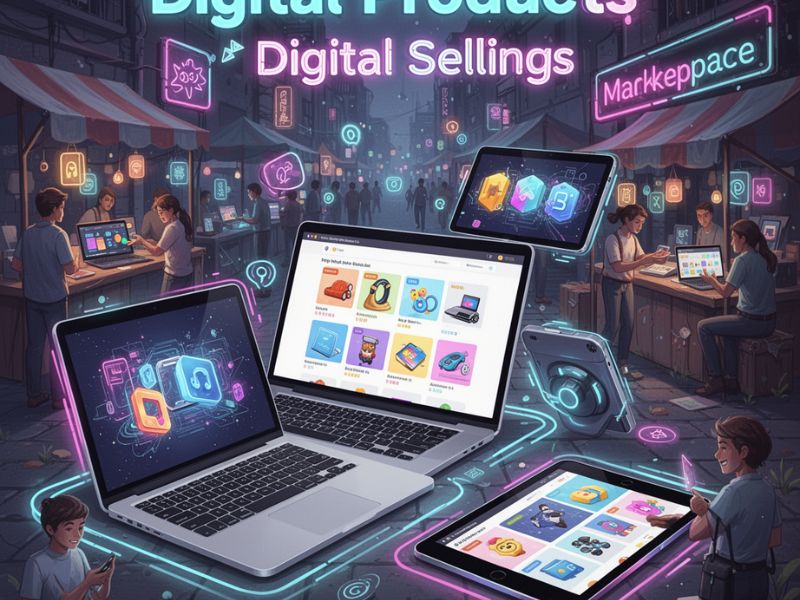
You can sell digital products through your own website or third-party platforms.
Popular Digital Product Selling Platforms
- Your own website with payment integration
- Online marketplaces
- Course-hosting platforms
- Email-based sales funnels
When possible, selling through your own website gives you full control over branding, pricing, and customer data, which is excellent for SEO and long-term growth.
SEO Tips for Digital Product Selling Websites
Search engine optimization plays a major role in consistent digital product sales.
On-Page SEO Best Practices
- Use the keyword “digital product selling” naturally in:
- Page titles
- Meta descriptions
- Headings (H1, H2, H3)
- Image alt text
- Write long-form, helpful content (800–1500 words)
- Optimize page loading speed
- Use internal links to related blog posts
Content Ideas That Rank Well
- How-to guides
- Comparison articles
- Beginner tutorials
- Case studies and success stories
SEO-driven content helps bring organic traffic that converts long after publishing.
Marketing Strategies for Digital Product Selling
Creating a digital product is only half the work. Marketing is what drives sales.
Effective Marketing Channels
- Content marketing – Blogs, videos, podcasts
- Email marketing – Newsletters and automated funnels
- Social media – Short-form videos and carousel posts
- Affiliate marketing – Let others promote your product
- Paid ads – Scale what already works
The most successful digital product sellers focus on building trust before selling.
Common Mistakes to Avoid in Digital Product Selling
Avoid these pitfalls to save time and money:
- Creating a product without validating demand
- Targeting everyone instead of a specific audience
- Overloading the product with unnecessary content
- Ignoring SEO and organic traffic
- Not collecting customer feedback
Learning from these mistakes can dramatically increase your chances of success.
Final Thoughts: Is Digital Product Selling Worth It?
Absolutely. Digital product selling is one of the most flexible, scalable, and profitable online business models available today. With the right product, clear positioning, and strong SEO strategy, you can build a sustainable income stream that grows over time.
If you’re ready to start, focus on solving a real problem, creating value, and consistently marketing your product. The results will compound faster than you expect.